Game Center, iCloud and in-app purchases

· 2 min read
Balaur
platform is one module over every store. A script that unlocks an achievement says the same thing on Game Center as it will on Play Games and on Steam. Today the store behind it is Apple's.
What landed

  • platform. sign_in, unlock, progress, submit_score, scores, cloud_read, cloud_write, set_presence. With no store loaded — the editor, a desktop run, a replay — every call answers unsupported rather than failing, so a script written against it runs everywhere.
  • apple. Game Center behind the portable verbs; the iCloud key-value store behind cloud_read. What only Apple has stays in its own module: Sign in with Apple, identity for a server to verify, the Game Center dashboard and access point.
  • Purchases. products, purchase, entitlements, restore_purchases and finish_purchase. StoreKit 2 has no Objective-C interface, so a small Swift shim is compiled at build time; a machine without Swift still builds, and purchases there answer unsupported.
  • Arrivals. Notifications, push tokens, URLs opened, a purchase that landed on another device: apple::watch(node), and they reach that node.
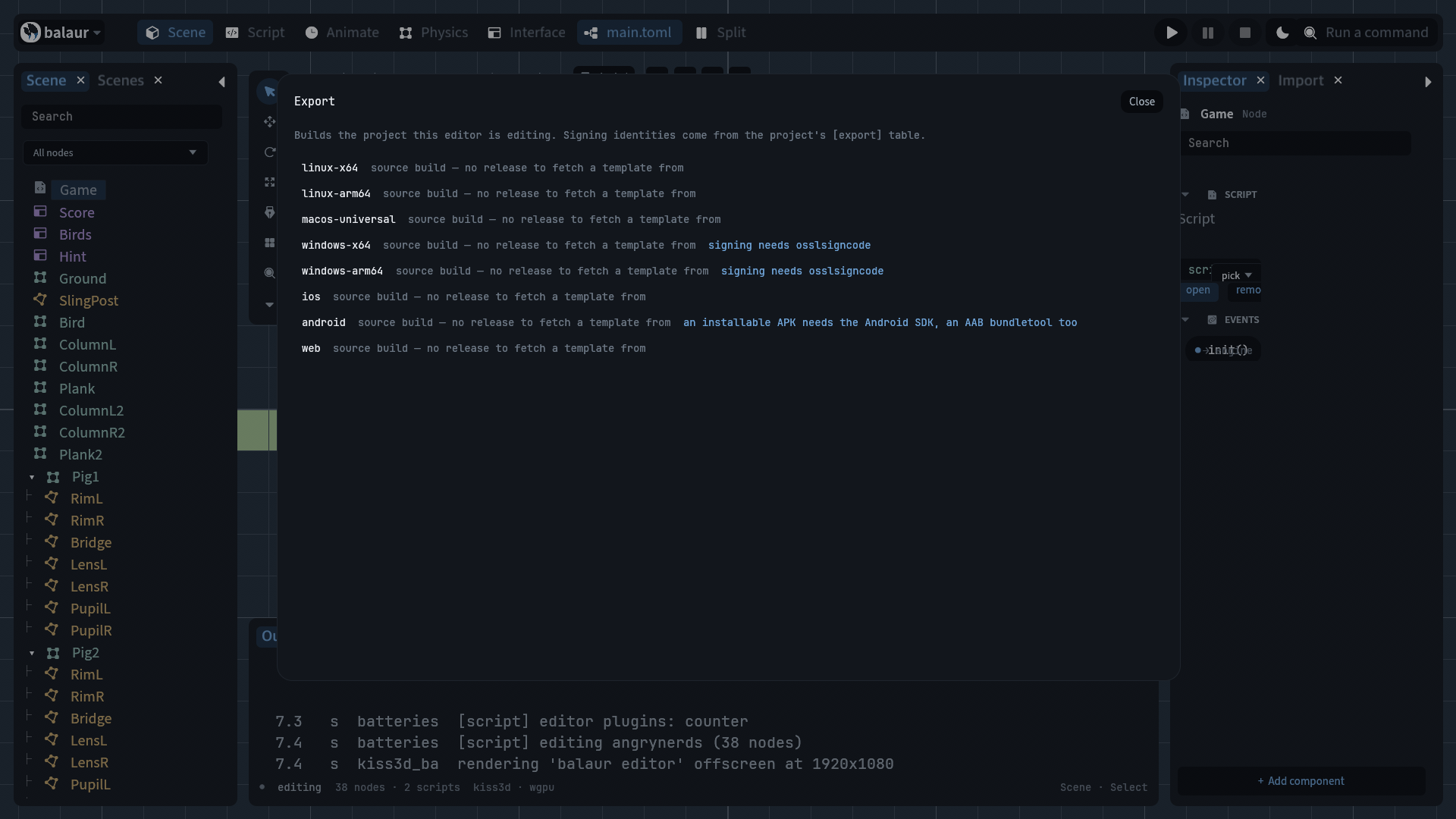
  • The export writes the plist. [apple] in project.toml — bundle id, team, version, capabilities — becomes the Info.plist and an entitlements file. It refuses what it cannot make work.
pub async fn init(this) {
let me = task::wait(platform::sign_in(this.node)).await;
log::info(`playing as ${me["alias"]}`);
platform::unlock(this.node, "first_blood");
}

An achievement cannot be un-awarded, and a rollback session re-runs predicted ticks, so a call that changes the store waits until its tick can no longer be re-run. The engine carries the proof — an identity signature, a transaction's signed jws — and checking it is a server's job. Stores · Shipping: Apple