Features
The engine features. See also Principles.
Nodes, scenes, scripts
- Scene tree. Nodes with scripts attached. →
- Rune. Rust's syntax,
async/await. Instant reload. → - Debugger. Breakpoints, stepping, frames and locals, in the editor. →
- Assets. Content referenced by a node. →
Simulation
- Physics. 2D and 3D through Rapier, on a fixed 60 Hz step. →
- Animation. Clips, tweens and easing. →
- Skeletons. Bones with skinned polygons. →
- Determinism. Same inputs, same outputs, on every platform. →
Screen and sound
- Rendering. 2D and 3D. →
- Objects. Basic primitives, bezier paths, text and boolean operations. →
- Tile maps. Solid, one-way, animated and light-blocking tiles. →
- Lights. 2D lights and occluders, with post-processing on top. →
- Shaders. Materials written in WESL. →
- UI. Widgets and an immediate-mode API for tools. →
- Text. Outline, shadow, markup and bitmap fonts. →
- Audio and input. audio playback; keyboard, mouse, gamepads, touch controls and gestures. →
Online
- Networking. HTTP, WebSockets and WebTransport, with compression. →
- Gamend. Accounts, lobbies, chat, leaderboards, server hooks. →
- Stores. Sign-in, achievements, leaderboards, cloud saves and purchases, on Game Center, iCloud and StoreKit. →
Tools and shipping
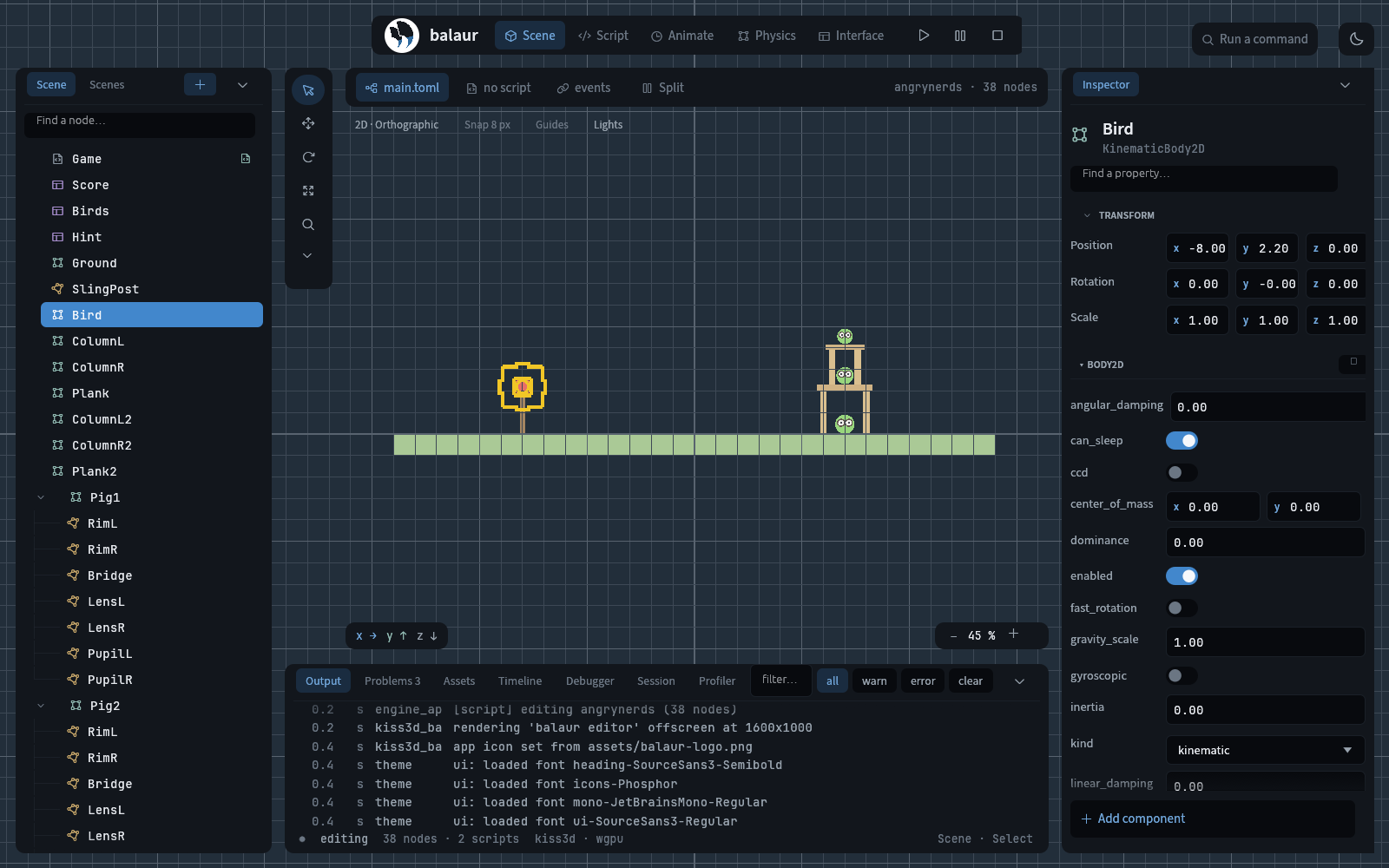
- The editor. A Balaur project: tree, inspector, timeline. →
- Select and arrange. Select, group, align and hide. →
- Editor plugins. Docks, tools and custom commands. →
- Script tooling. Completion, hover, go-to-definition, rename and formatting. →
- Plugins. Rust or C, static or dynamic. →
- Export. Bytecode, scenes and assets. →
- Platforms. Windows, macOS, Linux, iOS, Android and Web. →
- Written in Rust. Reusing popular libraries, and Rapier, wgpu, egui, rodio, Rune. →
MIT licensed. See Getting started.