The 3D look
· 2 min read
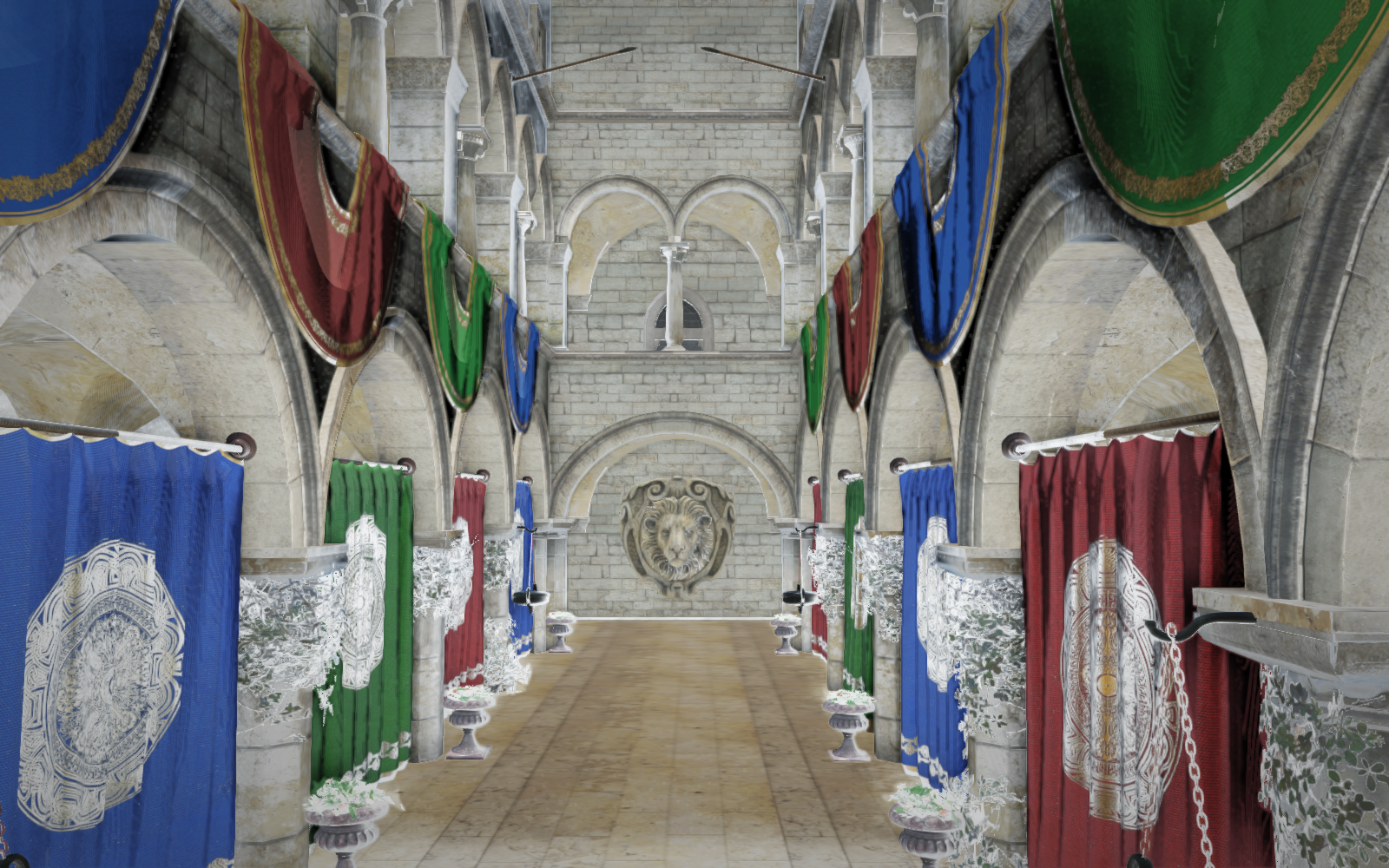
Sponza, read by one balaur import and lit by its own sky. Nothing in it was
authored by hand except a camera, a sun, an environment and a player.
- A material arrives whole. Every factor and map, the alpha mode and its cutoff, the index of refraction and the volume. One mesh node per material: Sponza is 25 over 103 primitives.
- The sampler comes too. A floor whose coordinates run past one, clamped, draws as one stretched texel. The import writes the file's own wrapping beside each image, so the marble arrives tiled.
What a surface now reads
package::mesh binds four things it did not: the sky as an environment map,
the occlusion the prepass measured, the reflection probes, and the scene glass
refracts. Each has a one-pixel stand-in, so nothing branches on absence.
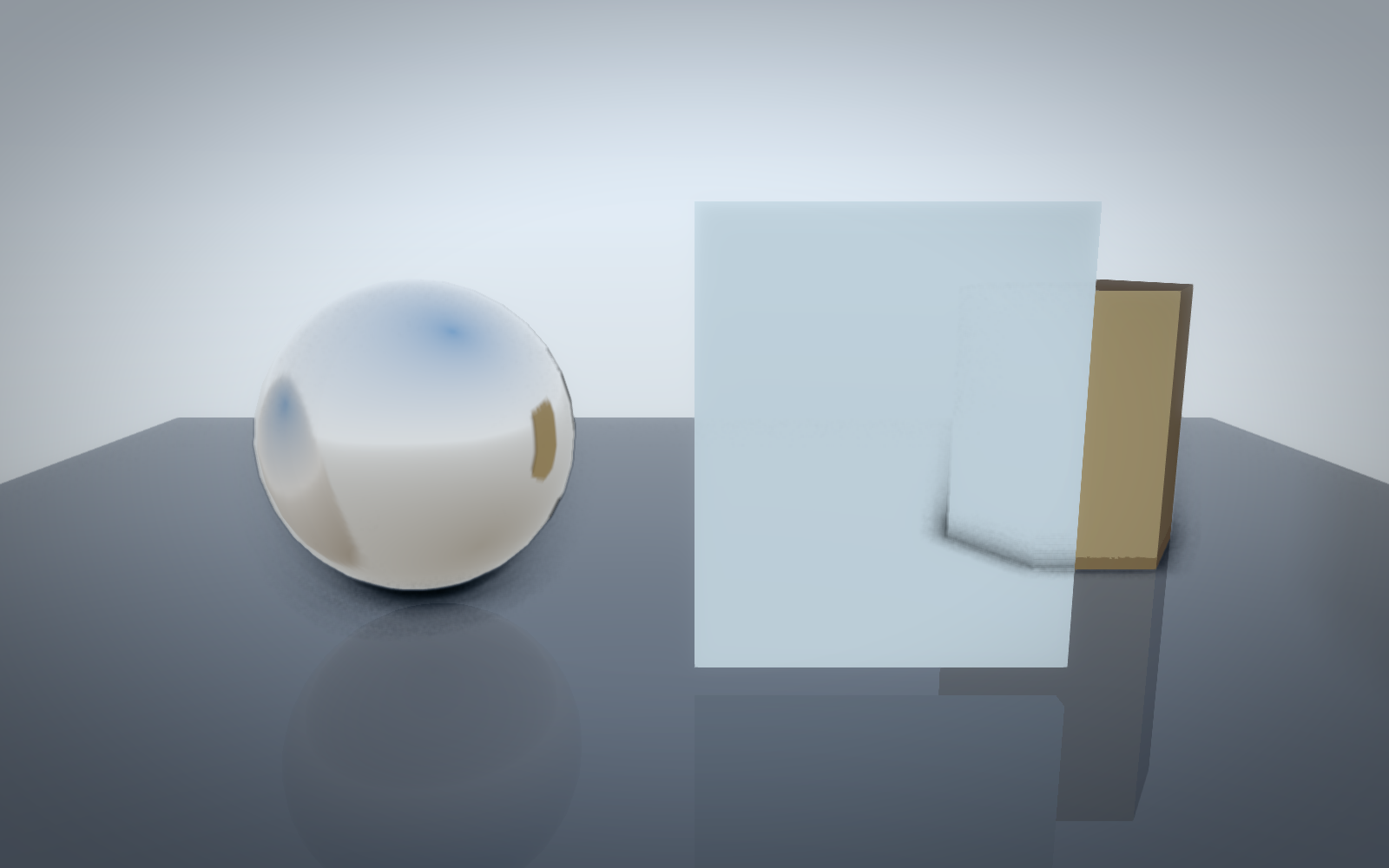
- Image-based lighting replaces
environment.ambientrather than adding to it. Both stand for the same bounced light. - Glass is
[surface]on the material:transmission,ior,thicknessand a volume colour. It draws after the opaque scene resolves and refracts it, keeping its own highlights on top. - A mirror renders the scene from its own plane and replaces what the sky would have shown.
- A
reflection_probeis a box a room was captured inside. A surface in it reflects the room, aimed at the box rather than at infinity.
Occlusion, and the pass it needed
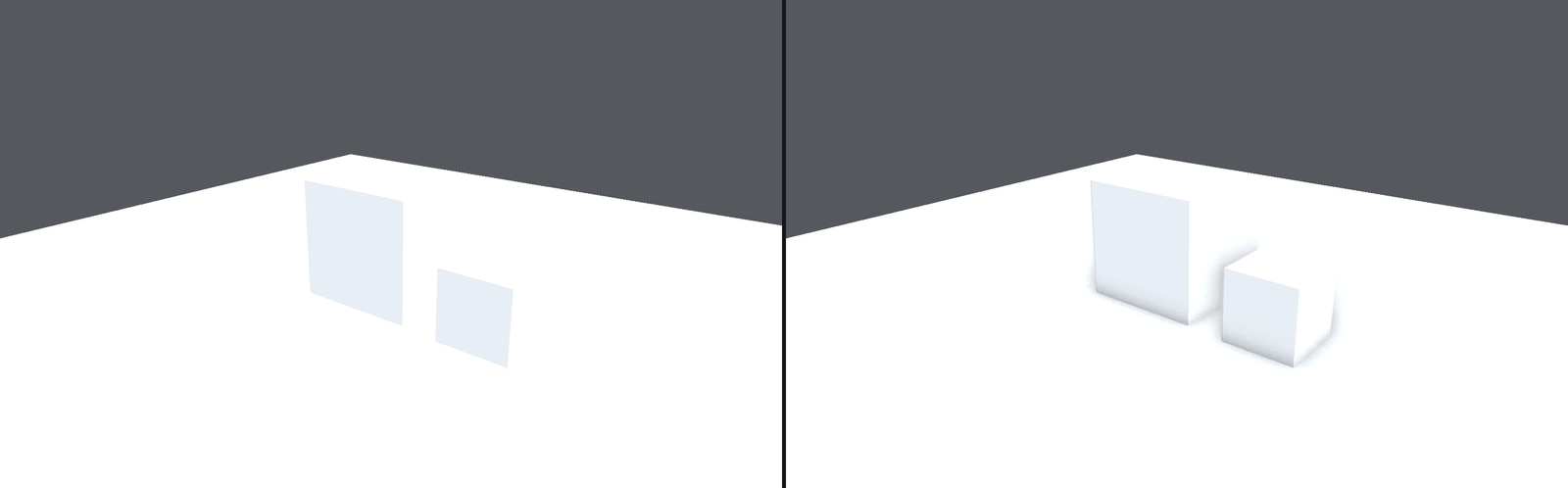
Every 3D material now draws a geometry prepass. Without one a project's material fed nothing to the buffer occlusion reads, so its surfaces were the only ones a crease never darkened.
Four passes to finish on
vignette,aberration,grainandpixelateare names oncamera.post, drawn where the list puts them.fxaaandsharpenjoin them from the renderer.- The layer stack ships in the editor's library: colour, image, gradient, noise, matcap, fresnel, toon and outline, each a flag with its own knobs.
The Sponza project is its own repository.