Save games
· One min read
save::write(slot, data) and save::read(slot): a table per user, written
so a crash cannot truncate it, and migrated when the game moves on.
What landed
- Slots. A slot is a name — letters, digits,
-and_— checked rather than trusted.save::slots()lists them andsave::remove(slot)deletes one. Files live under the platform's user-data directory, so game code never hardcodes an OS path. - Atomic. A file is written beside its target and renamed over it, so a crash mid-save leaves the previous file whole.
- Versioned. Every file carries the build's
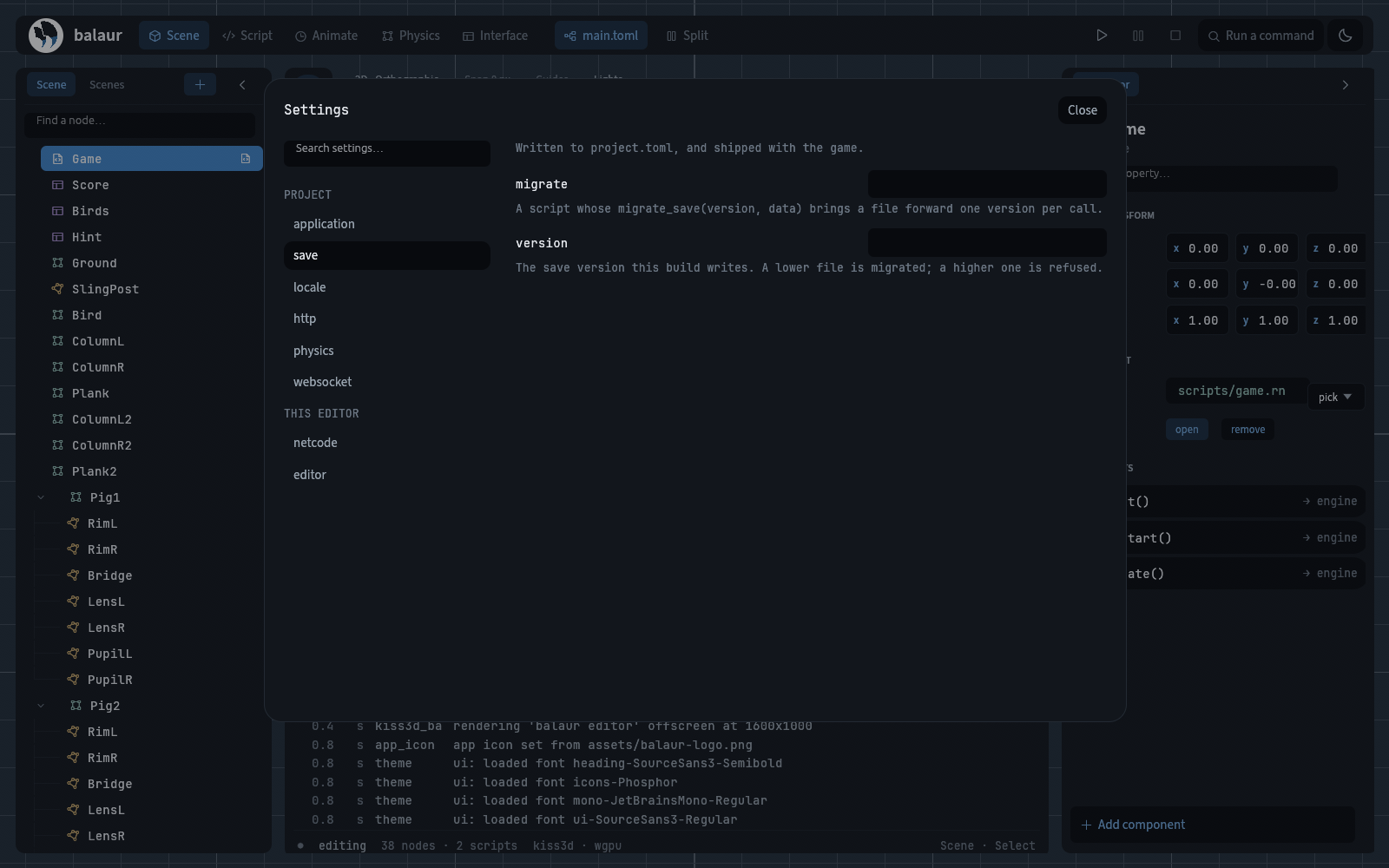
[save] version. Reading an older one calls the migration script'smigrate_save(version, data)once per version step — 1 to 2, then 2 to 3 — so a migration only knows how the shape changed between two adjacent versions. A file from a newer build is refused rather than misread.
# project.toml
[save]
version = 3
migrate = "scripts/saves.rn"
save::write("slot1", #{ level: 4, coins: 120 });
let data = save::read("slot1");
Shipping a game has the details.