Rollback networking
Two engines exchange inputs and nothing else. Each predicts the other, rolls back when it guessed wrong, and compares a digest per tick to catch a desync.
What landed
-
Rollback. A snapshot restores a tick and the deterministic simulation re-runs the same inputs forward. Node ids are stable across spawns, so a node created in a predicted tick is the same node after the re-run. Scripts see
rollback::inputandrollback::is_resimulating. -
A digest per tick, exchanged. A peer publishes the hash of a tick only once every player's input for it has arrived, and a desync names the tick. Windows CI caught the first version comparing a prediction against a prediction on any link slower than the confirm lag.
-
One
Transport. Websockets, and QUIC throughbalaur_webtransport, where a datagram is a real one: a lost input costs a misprediction, not a stall.balaur_http,balaur_websocketandbalaur_webtransportare one crate each, behind their own features. -
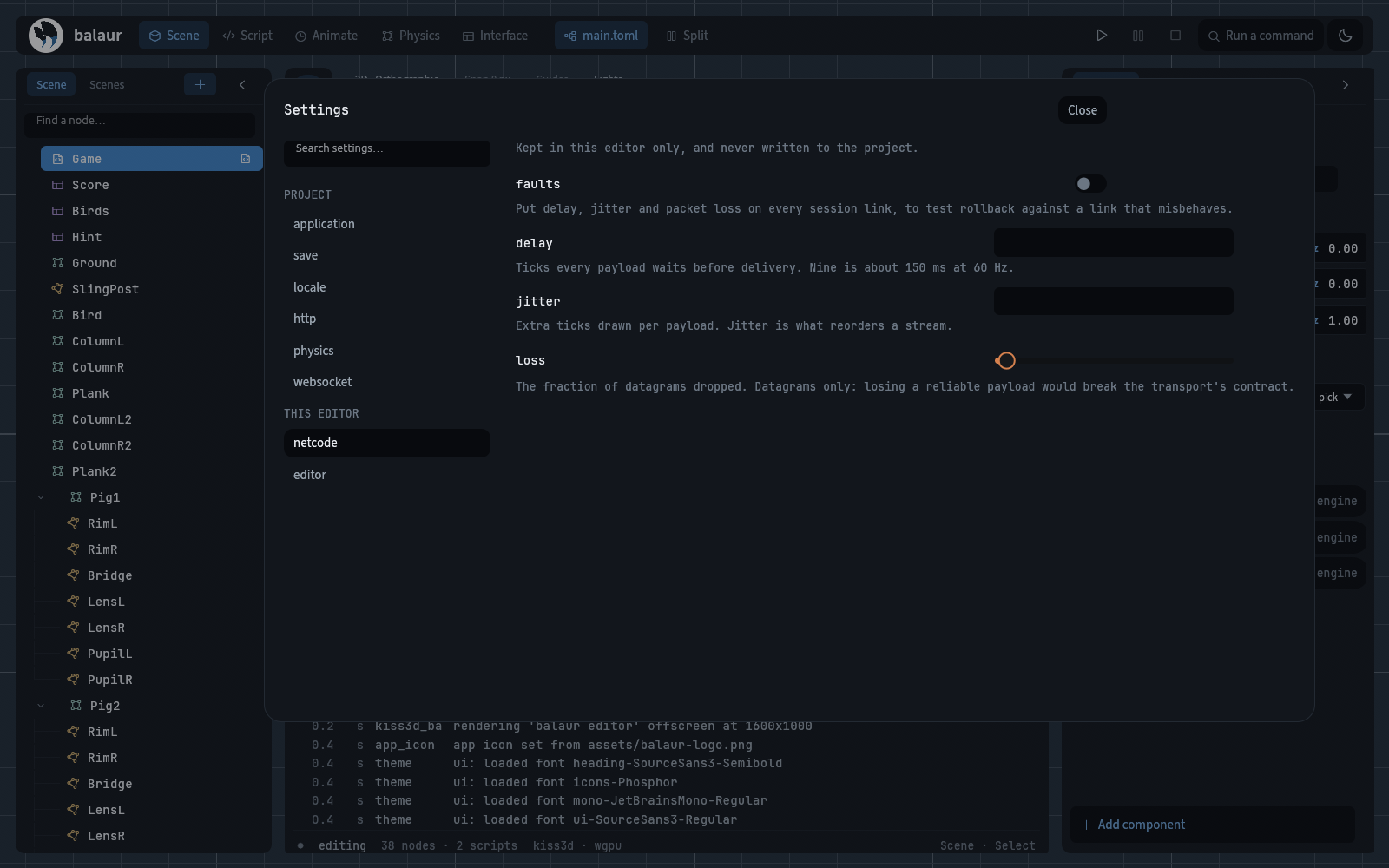
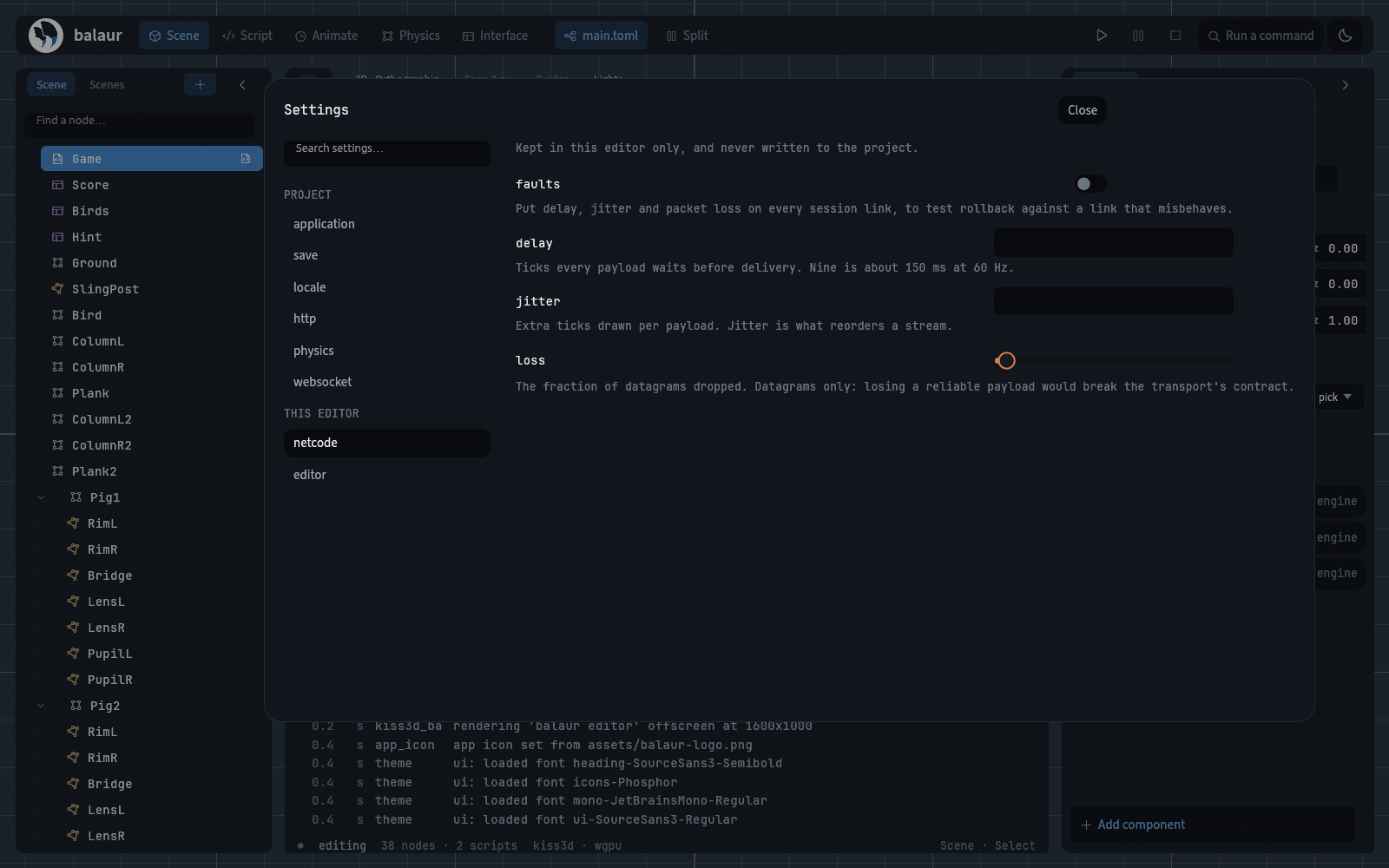
A link that misbehaves. Delay, jitter and datagram loss on every session link, from the editor's settings, so rollback is tested against the link a player actually has.
What is not there
A session a script can open. Rollback runs between two engines in a test and over a socket; the session API and replication are the next steps of PLAN-networking.md. Raw UDP is not coming: QUIC datagrams cover it, with encryption and a browser story.