Benchmarks
· 2 min read
examples/benchmark is the Godot benchmark suites' physics and scene-tree
cases, body for body, run headless, in the editor or on the web. On the
twelve physics cases Balaur is the quickest engine: about 3× Godot Jolt,
11–18× Godot Physics.


The suite
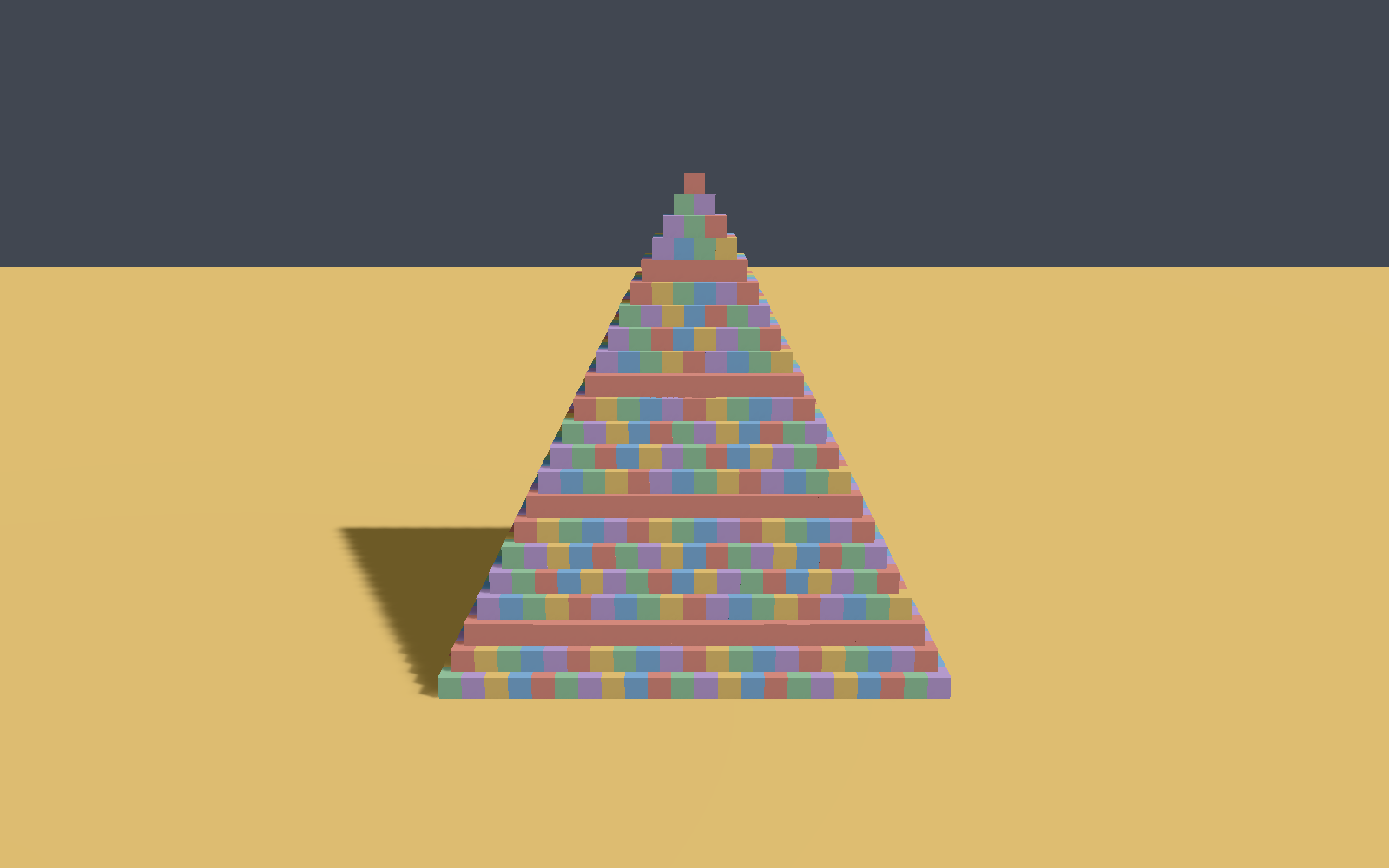
- Physics. Pyramid, mixed pile, joint grid, smash, query storm, drop — in 2D and 3D, the same scenes the godot-rapier suite publishes. 300 timed steps at 60 Hz after a settle; the median tick is the number.
- Nodes.
add_children,delete_childrenin order, reverse and random,get_node, against Godot's own published run. scripts/bench_compare.pywrites the tables and charts from a run beside Godot's results, so the benchmarks page is a script's output, not a claim.
What it changed
raycastvisited every collider along the ray; it stops at the nearest hit now.- Creating a body propagated the whole tree; it composes the node's pose from its ancestors instead.
- A frame's queued frees run as one pass per parent, so freeing a whole container is linear.
- Children are indexed by name, so a path lookup is one hash per segment, and freeing a node with no components asks no plugin anything.
Adding children is quicker than Godot; deleting and looking up are not yet, and the table says so. Rapier is under both Balaur and Godot Rapier, so the gap between those two columns is the engine around the physics.
balaur run examples/benchmark --headless --fixed-tick -- --case=3d/pyramid
python3 scripts/bench_compare.py --shots --godot-results <benchmarks-repo>/results