Batching
· 2 min read
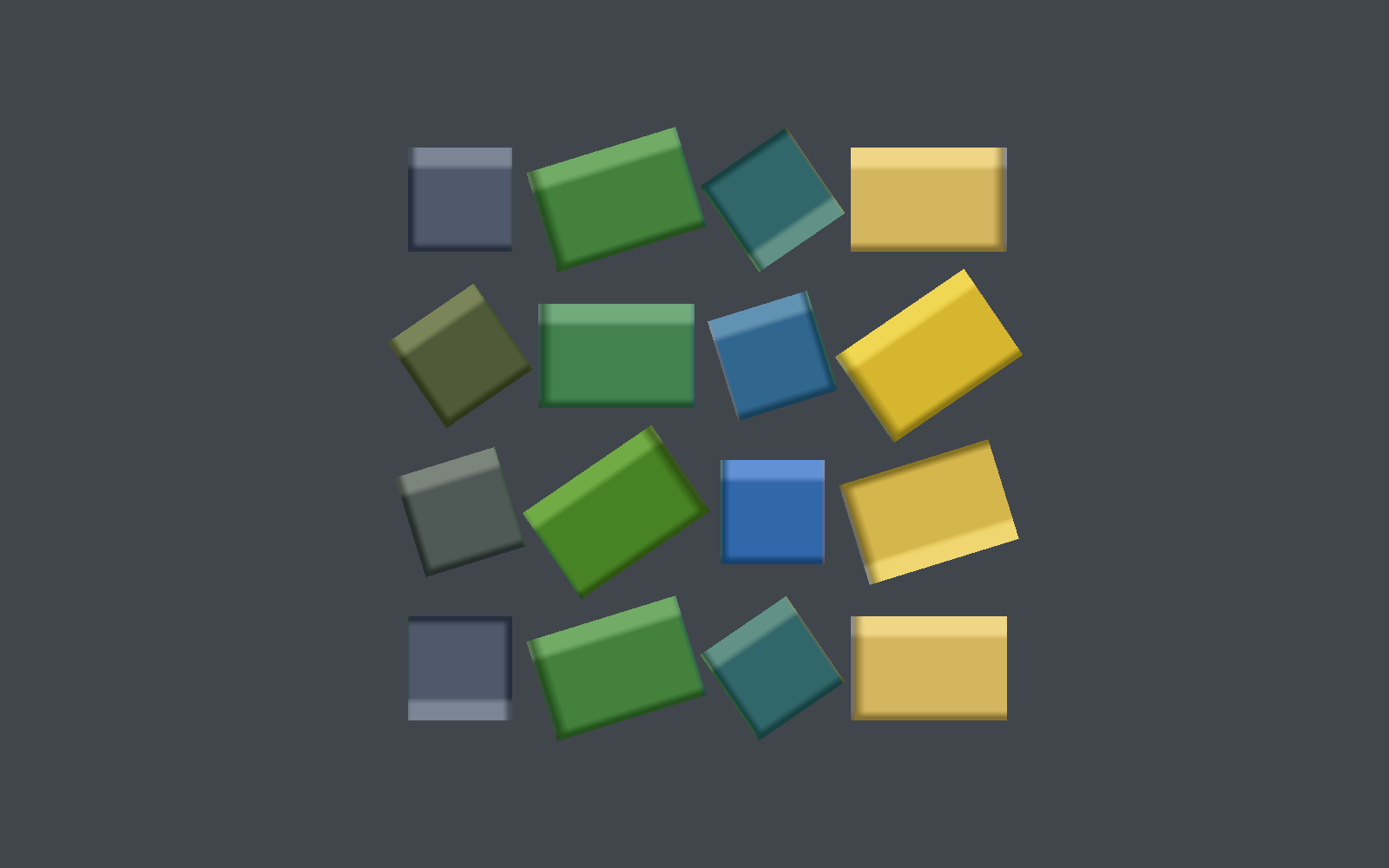
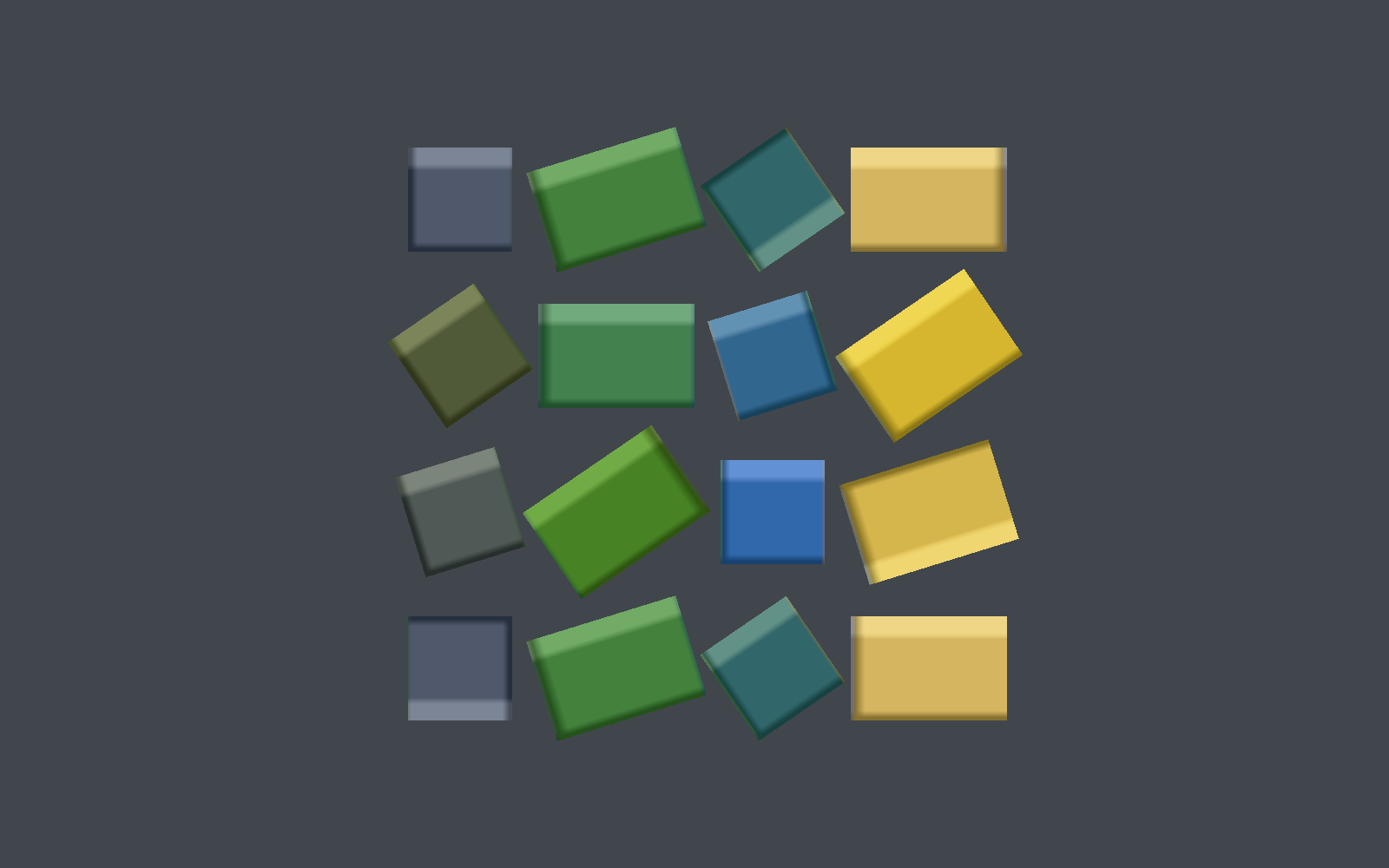
Nodes that draw alike now go to the GPU as one call, with a position, a size and a tint per instance. Nothing turns it on.
What it costs, offscreen at 1600x1000
| case | render CPU before | after | GPU before | after |
|---|---|---|---|---|
| 5000 circles | 22.7 ms | 0.41 ms | 1.56 ms | 1.02 ms |
| 2000 cuboids | 30.7 ms | 0.77 ms | 3.67 ms | 4.03 ms |
| 2000 balls | 31.9 ms | 1.49 ms | 13.5 ms | 5.50 ms |
What joins a call
| kind | grouped by |
|---|---|
| sprites | image, material |
| shapes | primitive and its size, material |
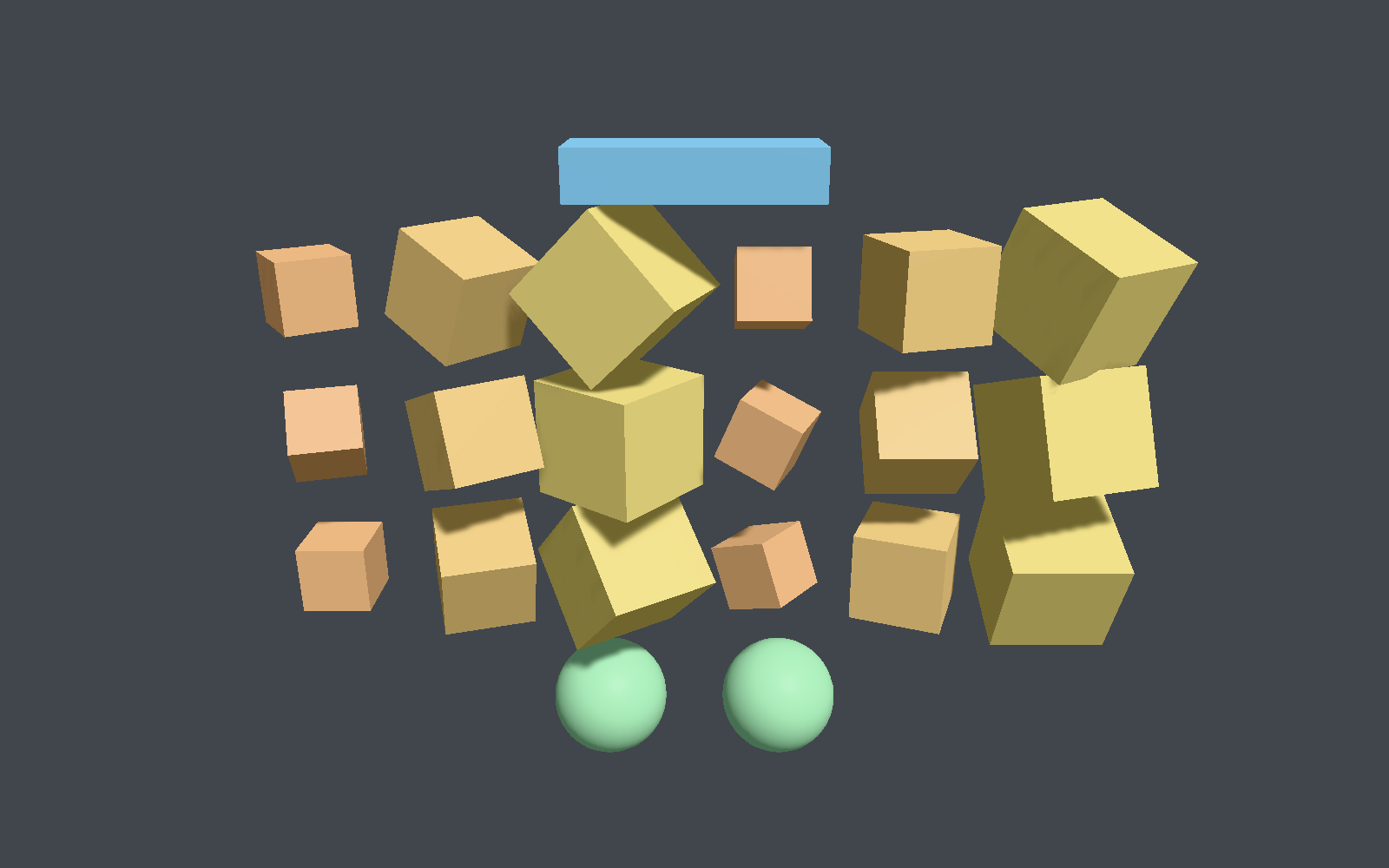
| meshes | geometry or mesh asset, texture, material, shadows, light layers |
- A sheet frame joins the run. The frame is a rectangle on the instance, where it used to be a private copy of the built-in quad with rewritten coordinates.
- In two dimensions a run is cut along the draw order, so what covers what does not change. In three it is not, because geometry is depth-tested.
What keeps a draw of its own
| kind | why |
|---|---|
| polygon, polyline | geometry of its own |
| own material | its own pipeline |
| skinned, morphed | deformed on its node |
cloner, levels of detail | already instanced, or swaps geometry |
| uneven scale | the instance's matrix goes through its normals |