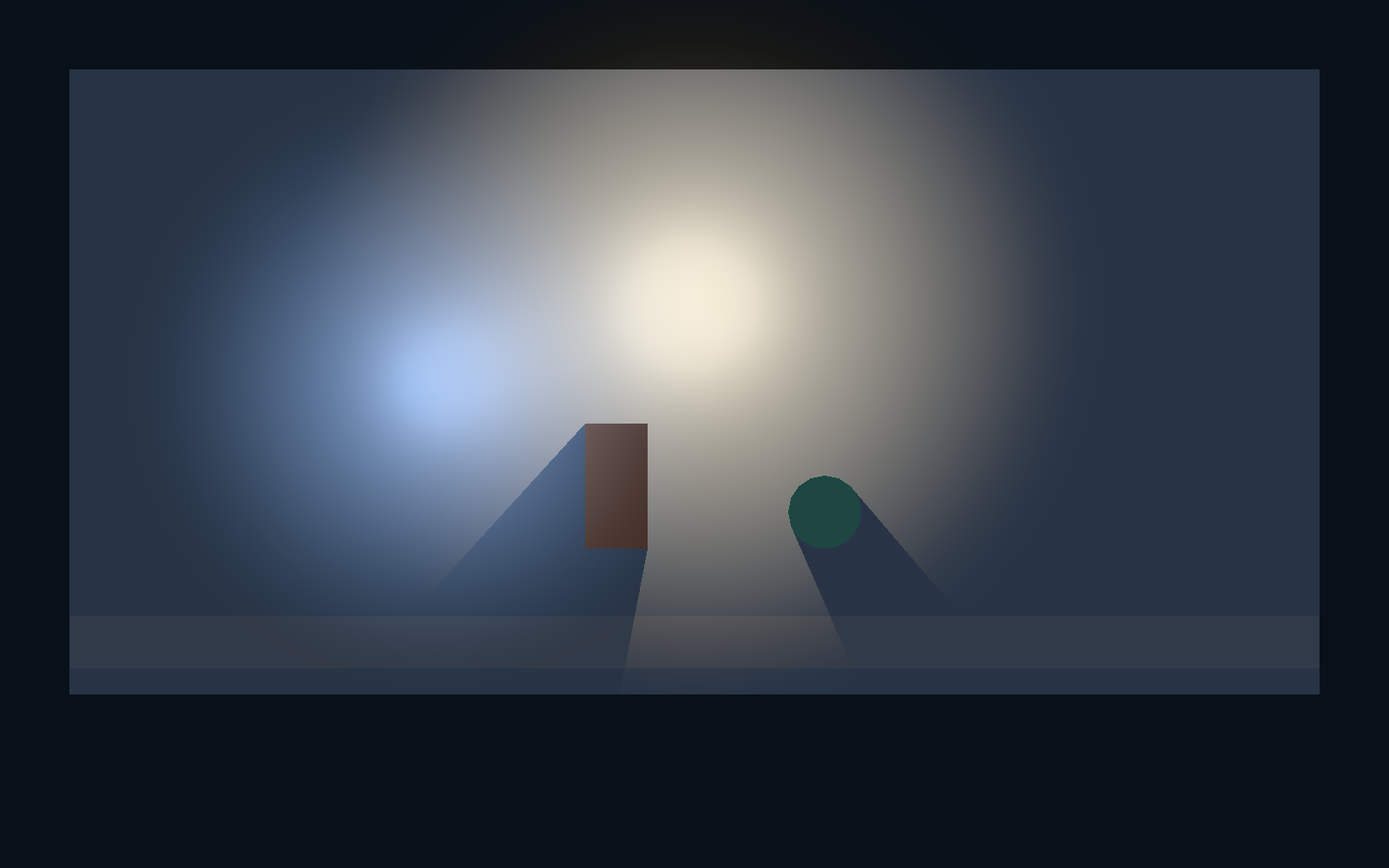
2D lights and shadows
A 2D scene draws unlit until something lights it. Add one light2d and
everything already drawn is multiplied by a light map — sprites, polygons,
tile maps — with nothing else having to know.
What landed
-
light2d. Point or directional, withcolor,radius,intensityandshadows. A point light fades quadratically to exactly nothing atradius, so its edge has no seam. The camera'sambientis what the unlit parts fall to: black is a cave, a dim blue is dusk. -
occluder2d. Left empty, the outline follows the node'scollider2d, or its circle, capsule, rect or sprite — the thing a player sees casts the shadow, authored once. A directional light's shadows are parallel because its rays are.
-
Bloom.
post = ["bloom"]on the camera; anintensitypast 1 is what it picks up.ssao,ssranddofare the 3D three. -
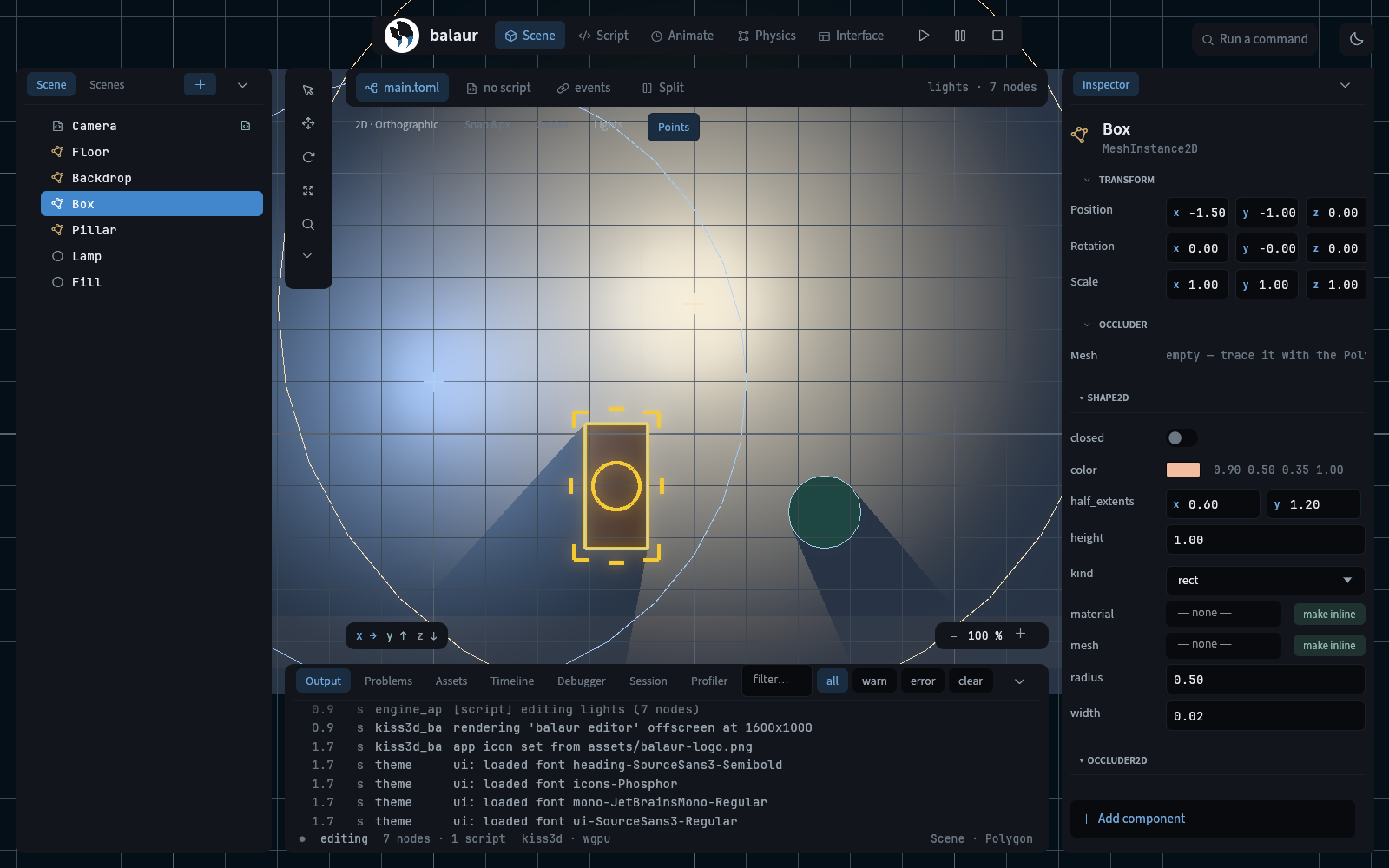
In the editor. A Lights chip draws every light's reach and every occluder's resolved outline, and the Polygon tool traces an occluder in Points mode.
[nodes.light2d]
kind = "point"
color = "#ffd28a"
radius = 8.0
intensity = 1.6
shadows = true
Lights never touch the simulation: a lit game and a headless one tick
identically. A scene with no light2d draws exactly as it did before, with
no extra pass; a frame draws at most 64 lights.
Rendering has the rest.